
Articles
Global Sustainability Insights written for Sustainability Unlocked

Why do countries keep meeting at COP, and what has changed?
Every year, world leaders meet to negotiate climate action, often leaving us with familiar promises and disagreements. But climate negotiations have become increasingly entangled with energy security, international trade, industrial competitiveness and geopolitics. We explore why COP31 matters beyond climate targets, what makes this year's summit different and how decisions made between governments can eventually affect businesses, from their suppliers and operating costs to their access to finance.

How can El Niño disrupt businesses thousands of miles away?
El Niño changes where rain falls around the world, and with that, it can change where food is grown, how electricity is generated and whether factories can keep operating. Its effects can travel thousands of miles through global supply chains, affecting the availability and price of everything from agricultural products to raw materials. We explore why a change in rainfall in one part of the world can become a business problem somewhere else, and how companies can prepare for disruptions they may never see coming.
Your AI strategy is now an energy strategy
AI models are becoming more energy-efficient, yet the electricity needed to power AI continues to grow. How can both be true? A 160-year-old economic paradox helps explain why improvements in efficiency can sometimes increase total consumption. We explore what happens as AI becomes cheaper and more widely used, why its growth depends on electricity grids, data centres and other physical infrastructure, and whether greater efficiency will be enough to limit its environmental impact.

How does the loss of nature create risks for businesses?
these dependencies are often missing from business planning. What happens when the ecosystems supporting an economy begin to deteriorate? We explore how biodiversity loss and environmental degradation can translate into higher costs, disrupted production and financial risk, why natural capital remains difficult for companies to measure and manage, and how businesses can begin incorporating nature into everyday decisions.
The dangerous illusion of stability in climate risk
What if your business loses value because of a climate disaster that hasn't even happened yet? What happens when businesses, banks and investors can no longer rely on the past to predict the future? And are we prepared for climate risks that don't follow the rules our financial models were built around?
How is the business case for sustainability changing?
Is sustainability really losing ground, or is it becoming part of how businesses talk about competitiveness, energy security and economic growth?
As companies face pressure to control costs and remain competitive, sustainability is increasingly discussed alongside energy, resources and supply chain resilience. We examine what this shift means for corporate sustainability strategies.

Why does sustainability compliance cost businesses so much?
Three-quarters of companies surveyed by PwC in 2025 said compliance complexity was reducing their profitability. But how much of that cost comes from regulation itself, and how much from the way businesses are organised? Sustainability reporting often requires information scattered across finance, operations, procurement and other teams, with different systems, definitions and responsibilities. We explore why investing in new technology doesn't necessarily solve these problems, what the EU's changing reporting requirements have revealed about organisational readiness, and how better data, clearer accountability and workforce skills can make compliance less costly and more useful for business decisions.
Can sustainability regulation make businesses more competitive?
Sustainability regulations are changing what companies are expected to measure, disclose and manage. While compliance can create additional costs and complexity, it can also encourage businesses to improve how they use resources, manage risks and work across departments. We explore what it takes to turn new requirements into business value, and why workforce skills are an important.
What can Spain's blackout teach us about the energy transition?
In April 2025, a major blackout disrupted electricity supplies across Spain and Portugal, exposing questions about the resilience of modern power grids. As countries add more wind and solar power, are electricity networks, storage systems and regulations keeping pace? We explore the technologies needed to maintain grid stability, why investment in renewable generation alone is not enough, and how outdated infrastructure, slow permitting and weak incentives could become obstacles to the energy transition.
How are knowledge gaps holding back corporate sustainability?
Companies are setting sustainability targets, investing in new technologies and responding to growing expectations from customers, investors and regulators. But how much progress can they make if the people expected to deliver those commitments don't have the knowledge they need? Sustainability expertise is often concentrated in specialist teams, while decisions affecting emissions, resources and supply chains are made across the wider business. We explore how differences in sustainability knowledge between employees, teams and senior leaders can slow progress, and why building a shared understanding across an organisation matters for turning sustainability ambitions into results.
Whitepapers
Global Sustainability Insights Euromonitor International

Building a Sustainable Strategy: A Guide for Business Leaders
INSIDE YOU WILL FIND:
Tips to secure stakeholder buy-in and build a strong business case
Tools to help map and prioritise initiatives
Best practice for tracking progress and communicating sustainability messages effectively
Download the whitepaper (FREE)

Rethinking Sustainability: No Purpose, No Gain
INSIDE YOU WILL FIND:
Discover how businesses are putting all stakeholders at the heart of their recovery after COVID-19
Learn how companies are rethinking sustainability, broadening thinking beyond 'the impact on the environment
Get tips on how to connect a purpose-driven approach with company goals and strategies
Download the whitepaper (FREE
How to Align Sustainable Development Goals with Business Opportunities
INSIDE YOU WILL FIND:
Attractive business opportunities that contribute towards the Sustainable Development Goals (SDGs) in areas like resource efficiency, climate change, water scarcity and pollution.
Download the whitepaper (FREE)
How to Become a Sustainable Brand
INSIDE YOU WILL FIND:
The evolution of Sustainability
Examples of sustainable business practices through case studies
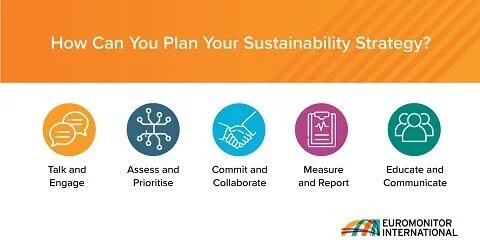
A framework for brands to plan successful sustainability strategies.
Download the whitepaper (FREE)
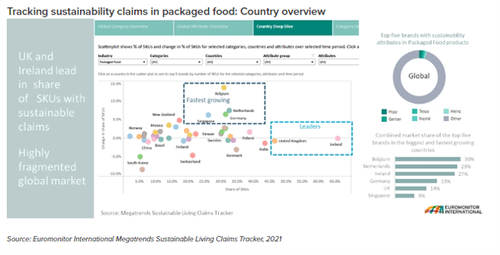
Tracking Sustainability Claims: Where to Play and How to Win
Understanding how to connect and resonate with consumers and where to play and how to win in markets where the shift from traditional to sustainable purchases is occurring, is key to capitalizing on these opportunities while contributing to sustainable development.

Five Key Trends Shaping the Sustainability Agenda
Climate action, circular economy, commodity price volatility, resource security and environmental pollution are the five key trends affecting the global sustainability agenda.

From Sustainability to Purpose: Driving Climate Action
Sustainability has made its way up to the boardroom. Boards of directors are making the connection between sustainability and financial performance with over a third of companies now seeing financial value in investing in sustainability.

Five Key Steps to Build a Sustainable Strategy
Understanding what sustainability means for a brand and learning how to create a successful strategy are key to ensuring the long-term operations of a business, and unlocking investment opportunities that help companies to remain competitive.

Quantifying Sustainable Living
This article explores the sustainable living megatrend, which talks about how consumers are increasingly embracing sustainable lifestyles and expecting businesses to stand up for social and environmental causes.
The PlasticsWorld Crisis
Concerns about plastic waste and marine pollution have skyrocketed especially after China announced its ban on imports of foreign waste from January 2018. This has inspired the EU to launch a new plastic strategy focused on two key goals, making all packaging recyclable, reusable or compostable by 2030 and achieving higher packaging recycling rates across Europe. This brings huge opportunities and challenges for both plastic manufacturers and the recycling industry.
Make it stand out
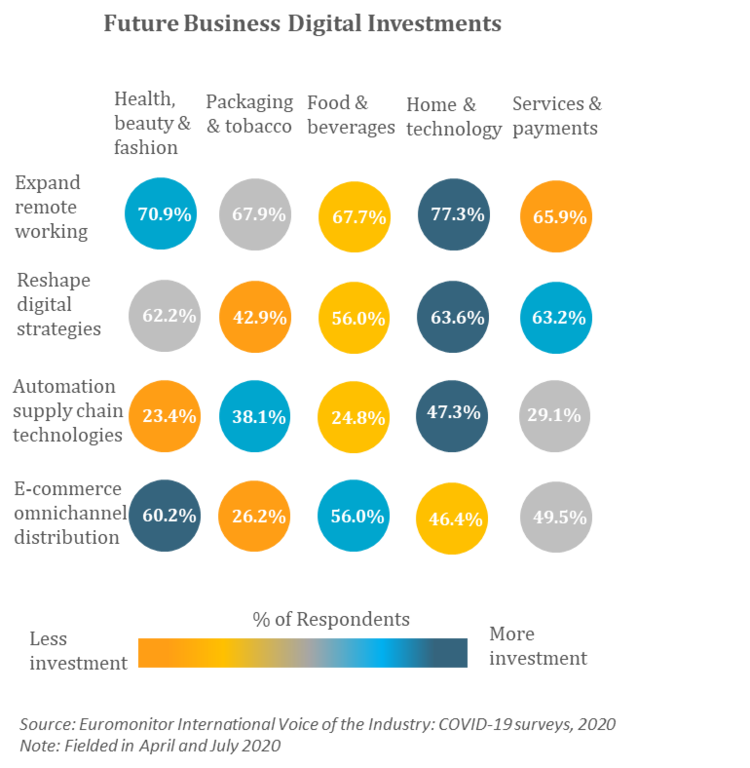
With purpose becoming the business mantra in the Coronavirus (COVID-19) era, digital technology is increasingly seen as an enabler of purpose-driven innovation to achieve sustainable recovery.
Since the beginning of the outbreak, digital platforms have been key for businesses to show social purpose, with technology being leveraged to support the most vulnerable people during isolation. For instance, in response to COVID-19.

Climate Change: Why Now?
Action cannot be delayed but yet only 14% of them report their company having a net-zero decarbonisation strategy.

Plastics: the End of a Love Story
With plastic waste dominating the news, the material is under global scrutiny for its negative environmental impact on the world’s oceans. Packaging companies are heavily investing in innovation towards sustainable alternatives, launching new formats that claim to be more environmentally-friendly.

The Rise of “Purpose-Driven” Businesses During COVID-19
By March 2020, 16.5% of companies had already downsized staff to reduce operational costs, according to findings from Euromonitor International’s Voice of the Industry: COVID-19 survey. Nevertheless, many businesses have managed to pull through by putting people ahead of profits, creating partnerships, redesigning products and supporting communities. This is the rise of “purpose-driven” businesses focusing on social issues.

Sustainability in Business Capturing the Value
We surveyed over 40,000 consumers and 900 professionals in our network to find out their sustainability priorities. These results should be used to guide your strategy.

Waterless Beauty: Opportunities Beyond Compliance
Global concern over water scarcity has been intensifying and will remain among the top ten environmental priorities in the next five years. Over 56% of professionals are reporting that their companies plan to invest in water-related initiatives between 2022 and 2027, compared to 39.3% of professionals in 2019, and over 44% of consumers are aiming to use less water to have a positive impact on the planet (Voice of the Consumers Lifestyles survey, 2021).

Marketing required for Water-Efficient Products to Succeed in Beauty and Personal Care
As water scarcity increases across developing regions, manufacturers of rinse-off beauty and personal care (BPC) products will face challenges in these regions where most of the potential growth in sales in the future is expected. A key priority to gain competitive advantage in these regions is therefore to develop affordable alternative ingredients designed to be used in water-scarce conditions. This presents big opportunities for ingredients manufacturers and BPC companies in the medium to long term.

Brexit: Waste Exit?
With Britain exiting the European Union (EU) and the China ban on imports of some types of foreign waste from January 2017, the UK could now face challenges in maintaining its current household recycling rate (44%) and increasing it further (55% by 2025, 60% by 2030 and 65% by 2035), as recently agreed in the four legislative proposals of the waste package reached with the European Parliament in December 2017. Any change in a trade agreement could have a relevant impact on both the UK and European waste management industries.
Reuse is the new recycle
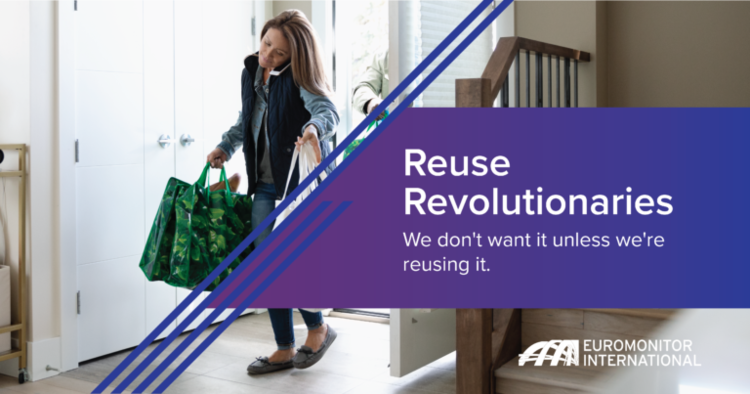
Thanks to the substantial impact sustainability has on brand perception, businesses are launching subscription models and reusable or refillable options to meet ethical consumer demands. Brands will need to find the balance between sustainability and convenience as consumers still rank efficacy, value and aesthetics as desired characteristics. To do so, there is more of a need to incentivize consumers to switch to reusable or refillable options when it comes to things like packaging.
Download the full “Top 10 Global Consumer Trends 2020” report for more.
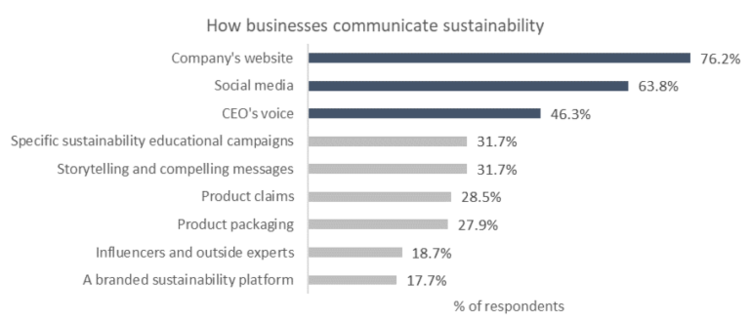
Awareness, Communication and Investment
In 2020, during a number of digital events, Sustainability Insights Manager Maria Coronado Robles discussed global sustainability trends and the impact of the pandemic. Here are the responses to a sample of questions that were asked
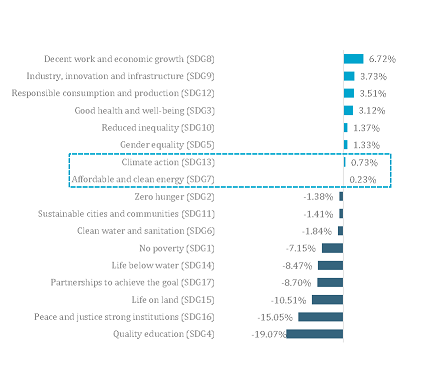
Coronavirus Turns the Spotlight on Climate Action
Increased social awareness is expected to remain, and it is highly unlikely to cast a shadow over pre-COVID-19 environmental concerns such as climate change, as demonstrated by the June 2020 Sustainability survey results, with 61% of businesses expecting to balance social and environmental issues as the crisis evolves.

5 Key Steps to Building a Sustainability Strategy
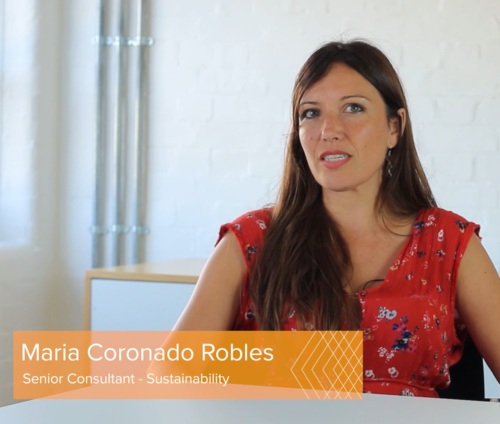
Today brands are facing increasing pressure from consumers, governments, NGOs, investors and insurance companies to have a positive and active role in protecting people and the planet. A growing number of businesses are promising to take action towards the 2030 Agenda for Sustainable Development. Understanding what sustainability means for a brand and learning how to create a successful strategy is key in ensuring a business’s long-term operations and unlocks investment opportunities that are tied to the UN Sustainable Development Goals (SDGs).
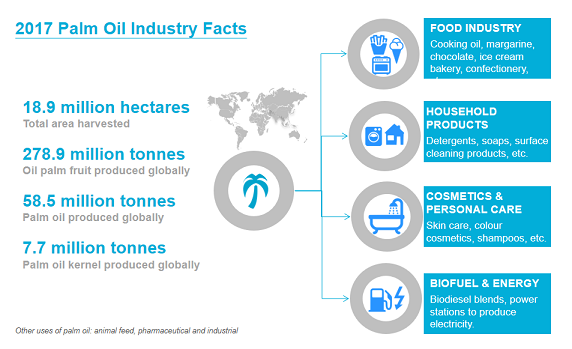
Palm Oil: From Controversial to Sustainable Commodity?
Palm oil is contained in half of the supermarket products, as well as being widely used as cooking oil among fast-growing populations in Asia Pacific, and increasingly used as biodiesel feedstock. Its global production has almost doubled over the period 2000-2017, now leading the production of vegetable oils, with Indonesia and Malaysia accounting for almost 90.0% of palm oil production growth.

Plastic Microfibres
Plastic microfibres from synthetic clothes such as polyester, acrylic and nylon are increasingly seen as a major source of microplastic pollution in our oceans, even more than microbeads from beauty and personal care products, which have already been banned in some countries. This fact brings new challenges but also creates huge opportunities for technological innovation in ingredients in both the apparel and home care industries.
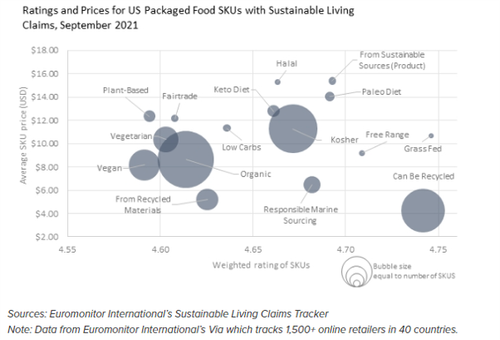
Sustainable Food: Will Consumers Pay a Premium?
Packed Food companies face numerous challenges and barriers to investing in sustainability with high costs and limited budgets being at the top of the list.

Fuelling Product Innovation in Laundry Detergent
Emerging economies are making the transition toward water-efficient laundry products that need less water for rinsing while concentrated detergents containing less water are predominant in developed countries, in an effort to cut packaging and transportation costs. There is still room for innovation, especially in emerging markets, where the development of effective and affordable less water-dependent ingredients is still challenging
Business Sustainability Gamechangers
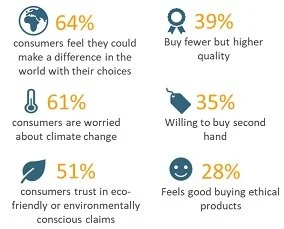
There are three key sustainability trends that are reshaping businesses across all industries, with implications for all players across the value chain, from raw materials and product manufacturers to logistics companies and retailers. Businesses that embrace ethical living, the circular economy and sustainable packaging will make headways in enhancing their brand image and reputation and winning over more ethical and demanding consumers.
New Consumer Values Drive Demand for Purpose-Led Innovation
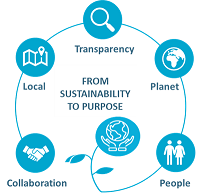
The pandemic has shifted the idea of sustainability and accelerated the rise of brands with a strong sense of purpose that goes beyond the traditional business “for-profit” approach. Forced to move from talk to action, many companies are putting society and planetary welfare, along with transparency and collaboration, at the heart of a global recovery that relies on local resilience.
Sustainable Packaging
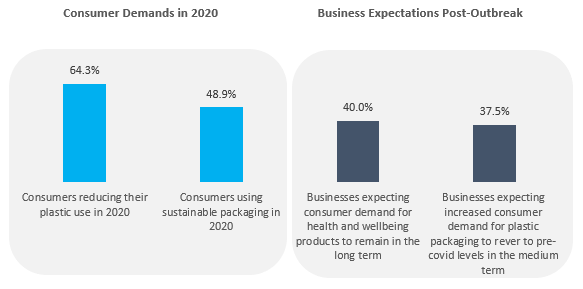
In 2020, Sustainability Insights Manager, Maria Coronado Robles and Head of Packaging Research, Rosemarie Downey, ran a number of digital events where they discussed global sustainability trends and the implications for the packaging industry. Here are the responses to a sample of questions that were asked.
Build back better: Climate emergency
The Build Back Better trend talks about the consumer desire for a “new normal” that feels kinder, fairer, and greener than the “pre-pandemic normal”. A positive future that is more respectful with the things that truly matter, the people we love, and the planet we live on.

Red Light for Triclosan Opens up Opportunities for Natural Probiotics
The recent US Food and Drug Administration (FDA) decision to ban certain chemical ingredients in antibacterial soaps comes after years of considerable controversy and bad publicity. With no suitable alternative proven to be safe, the red light for triclosan has received a warm welcome from the probiotic industry. In fact, probiotic ingredients are well positioned to penetrate the personal care market, favoured by the trend towards natural and milder ingredients.

Potential Global Ban Opens Up New Opportunities
Four years after Unilever pioneered the phasing out of plastic microbeads in 2012 in response to increasing environmental concerns about pollution of the ocean, other global players are making a voluntary commitment to get rid of them in the short-term. Some governments have even introduced relevant legislation. In fact, the US has just approved a bill that prohibits the distribution of products containing plastic microbeads by 2017 and a complete ban on sales by 2018. It is just a matter of time before the EU follows suit. This will create new business opportunities for companies that manufacture alternative ingredients.
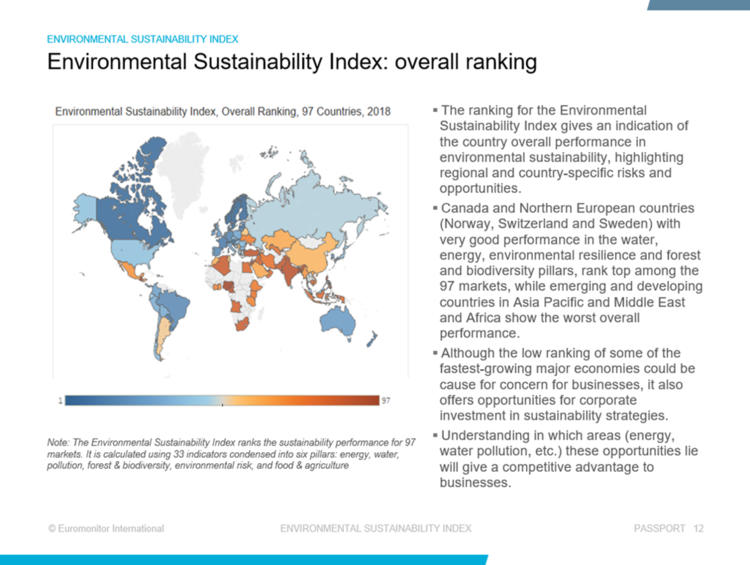
Euromonitor’s Environmental Sustainability Index
Euromonitor's Environmental Sustainability Index was launched on the World Environment Day!
Reports
Global Sustainability Insights Euromonitor International

Affordable Sustainability: Making it Simple and Accessible
This report urges businesses to embrace affordable and accessible sustainability. It presents a comprehensive set of effective actions that can be implemented seamlessly to unlock the untapped potential of democratising sustainability during times of economic uncertainty. The report also explores what the future of sustainability might look like, and gives recommendations for businesses to follow.
Purchase the report courtesy of Euromonitor International
Seizing the Opportunity in Sustainability
The global pandemic has drawn attention to sustainability, rising awareness and accelerating actions and investments from companies and governments. This report brings together insights from Euromonitor’s Voice of the Industry: Sustainability survey, which tracks how businesses define, manage and communicate sustainability, alongside insights from Euromonitor’s newly launched Sustainable Living Claims Tracker that tracks product claims across categories and countries.
Purchase this report from Euromnitor International
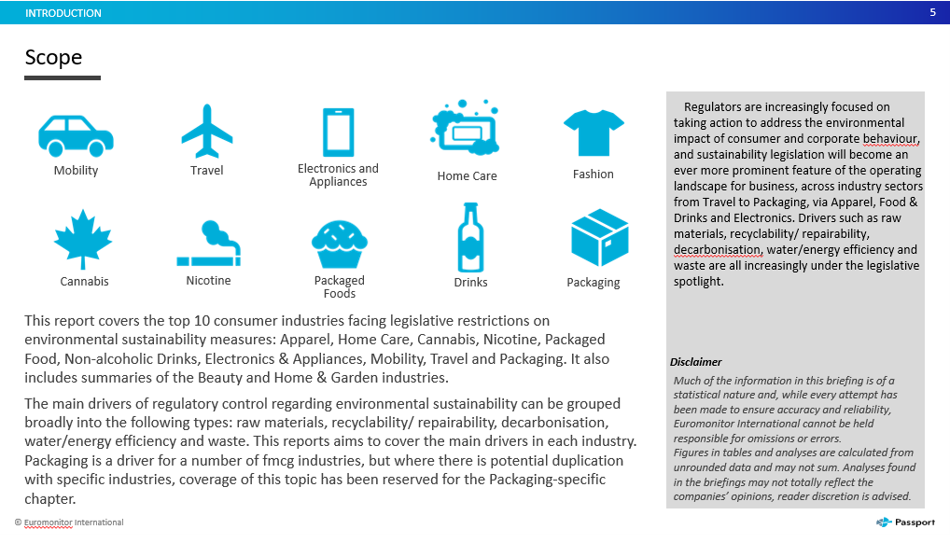
Environmental Sustainability Regulation: A Cross-Industry View
Regulators are increasingly focused on taking action to address the environmental impact of consumer and corporate behaviour, and sustainability legislation will become an ever more prominent feature of the operating landscape for business, across industry sectors from Travel to Packaging, via Apparel, Food & Drinks and Electronics. Drivers such as raw materials, recyclability/ repairability, de-carbonisation, water/energy efficiency and waste are all increasingly under the legislative spotlight.
Purchase the report property of Euromonitor Internationa
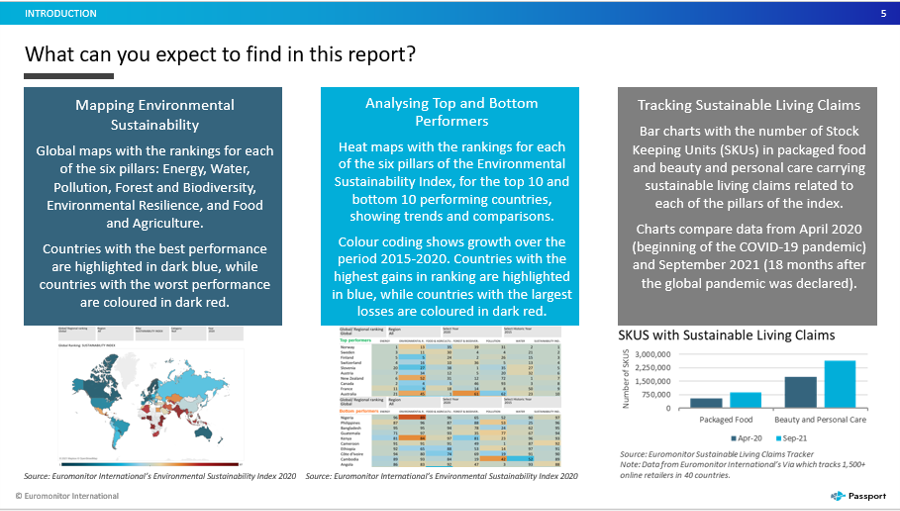
Environmental Sustainability: Country Performance and Product Claims
This report brings together insights from Euromonitor’s Environmental Sustainability Index, which ranks 97 markets (which in 2020 represented 97.2% of global GDP and 89.1% of the world’s population) highlighting country-specific risks and opportunities in the sustainability space) in combination with insights from Euromonitor’s newly launched Sustainable Living Claims Tracker that shows how companies use product claims to communicate sustainability with consumers.
Purchase this report from Euromonitor International

From Sustainability to Purpose: Refocus on the Planet
With the UN Climate Change conference (COP26) to be held in Glasgow, 2021 is set to be an important year to tackle environmental risks. While the strong focus on social issues during 2020 will prevail in 2021, the environmental side will emerge stronger than pre-pandemic. This also ties into the idea of building back better as part of the recovery, with many companies and governments showing their commitments for a green recovery.

Coronavirus Era: From Sustainability to Purpose
Sustainability has evolved beyond an inclusion of ethical credentials and environmental concerns to a more holistic approach that aims to create social, environmental and economic value. The Coronavirus (COVID-19) outbreak has merely accelerated the momentum. This report explores the shift in consumers’ values along with the purpose-driven business response to COVID-19 across six groups of industries.

Engaging with the SDGs: A Business Opportunity
This report discusses the business case for sustainability, and tracks the level of engagement with the United Nations 2030 agenda across different industries, highlighting attractive opportunities for businesses to contribute towards the sustainable development goals (SDGs) in different areas, such as resource efficiency, climate change, water and pollution, using a holistic approach that combines consumer preferences and market insights with key environmental indicators.
Full report courtesy of Euromonitor International Ltd
Voice of the Industry: Sustainability Survey 2022
This report highlights the results of the Voice of the Industry Sustainability Surveys fielded in 2021 and 2022, looking at sustainability strategies, cliamte action, Sustainable Developent Goals, communication and product claims and investments.

New Values Driving Purpose-Led Innovation
This report explores how the Coronavirus pandemic is affecting consumer values, influencing their behaviour, and how this is accelerating purpose-lead innovation across all industries. Combining data from consumer and industry surveys with inspiring case studies, the report shows how businesses are putting purpose at the core of their innovation strategies to meet new consumers’ values in the Coronavirus (COVID-19) era, while protecting the triple bottom line (people, planet and profit).
Author: Maria Coronado Robles

Coronavirus Pandemic to Rewrite the Future of Businesses
The Coronavirus (COVID-19) survey tracks the sentiment, preparedness, impact, reaction and future measures taken by businesses in light of the COVID-19 pandemic, and also predicts consumers’ shifts in behaviour using insights from 4,812 professionals working in companies spanning industries and geographies. This crisis has highlighted the need to entirely rethink businesses practices and strategies across the whole value chain with special focus on new technologies and social purpose.
Author: Maria Coronado Robles

Ethical Living in Western Europe: Advancing to a Circular Economy
Companies are advancing the circular economy by simplifying product design, using recycled content, offering spare parts, providing manuals and repair platforms and moving from products to services. With increasing awareness of environmental issues driving the rise in ethical consumption and more environmentally-conscious millennials gaining spending power, companies embracing circularity will have a key competitive advantage.

Coronavirus: Purpose-driven Brands
The Coronavirus (COVID-19) pandemic is changing consumers’ attitudes about sustainability topics, while corporations are responding to the pandemic by putting people and purpose first. This report highlights examples of businesses taking actions to fight the outbreak while protecting the triple bottom line (people, planet and profit).
Athor: Maria Coronado Robles
Purchase the report courtesy of Euromonitor International

Ethical Living: Plastics -Lose it or Reuse it?
Plastic, an influential part of modern society, is under scrutiny for its polluting presence in the global environment. There are visible and invisible pollutants. Greater awareness and growing ethical concerns about plastic waste is evident with circular thinking initiatives to design out surplus plastics, improve recovery and re-use, apparent. Current pressures are an opportunity to tackle plastic waste and advance towards zero litter.
Authors: Rosemarie Downey, Maria Coronado Robles Oksana Malynovska, Mylan Nguyen, MeiLing Yao

Circular Economy
Circular economy: Closing the loops
This study was undertaken on behalf of the International Solid Waste Association’s
Task Force on Resource Management, to support ISWA’s work assessing the potential role that the waste management sector can play in achieving greater resource efficiency and moving towards a circular economy.
A review of the value and potential to enhance the level of recovery of two key materials: polypropylene and paper & board.
Read full report courtesy of ISWA

Sustainability Post COVID-19
The global pandemic has drawn attention to sustainability, rising awareness and accelerating actions and investments from companies and governments. This report brings together insights from Euromonitor’s Voice of the Industry: Sustainability survey, which tracks how businesses define, manage and communicate sustainability, in addition to insights from Euromonitor’s newly launched Sustainable Living Claims Tracker that shows how companies use product claims to communicate sustainability with consumers.
Purchase the report courtesy of Euromonitor International

Digitalisation Shapes the Future of Business with Purpose
This report, written by six Euromonitor industry experts, explores the role that the trend towards digitalisation, accelerated by Coronavirus (COVID-19), is set to play across all industries in achieving supply chain and brand transparency, while also providing new tools that allow businesses to take more purposeful decisions to solve the world’s most pressing social and environmental challenges.
Author: Maria Coronado Robles
Environmental Sustainability Index
Environmental pressures and consumer demand are set to reshape business models and operations with a revolution of product technologies and services. This report introduces Euromonitor’s Environmental Sustainability Index, which ranks 97 markets – which in 2018 represented 89.1% of the world’s population and 97.2% of global GDP – highlighting country-specific risks and opportunities in the sustainability space.
Author: Maria Coronado Robles
Purchase the report courtesy of Euromonitor International

Voice of the Industry: Sustainability in the Coronavirus Era
This report captures the views of over 1,000 professionals working across different industries and geographies, on how the Coronavirus (COVID-19) pandemic is reshaping sustainability. The survey explores how companies define sustainability and engage with the UN’s Sustainable Development Goals (SDGs), while also identifying key barriers and drivers of sustainable investing, showcasing the hottest investment opportunities over the next five years.
Author: Maria Coronado Robles
Purchase the report, Euromonitor International

Disruptors: Harnessing Sustainability to Revolutionise Consumer Markets
With businesses increasingly investing in sustainable innovation, anticipating disruptive strategies is key to drive growth in the sustainability era. This report uses Euromonitor Renovation? Innovation ? Disruption framework to identify ways to future-proof businesses, with examples of the most innovative/disruptive brands across different industries and geographies, showcasing alternative business models and breakthrough product designs that are more respectful with the limits of the planet.
Authors: Trishna Shah, Filip Hoffmann-Häußler, Maria Coronado Robles
Full Report courtesy of Euromonitor International

Future of the Family: Sustainable Households
The Future of the Family: Sustainable Households report analyses the challenges and opportunities in sustainability trends among households in the coming years. Sustainable households of the future will have a greater emphasis on the circular economy. Responsible consumption, waste and water recycling, and rain water harvesting, along with renewable energy generation and indoor food production, are expected to be the new essentials for sustainable housing.
Full report courtesy of Euromonitor International